





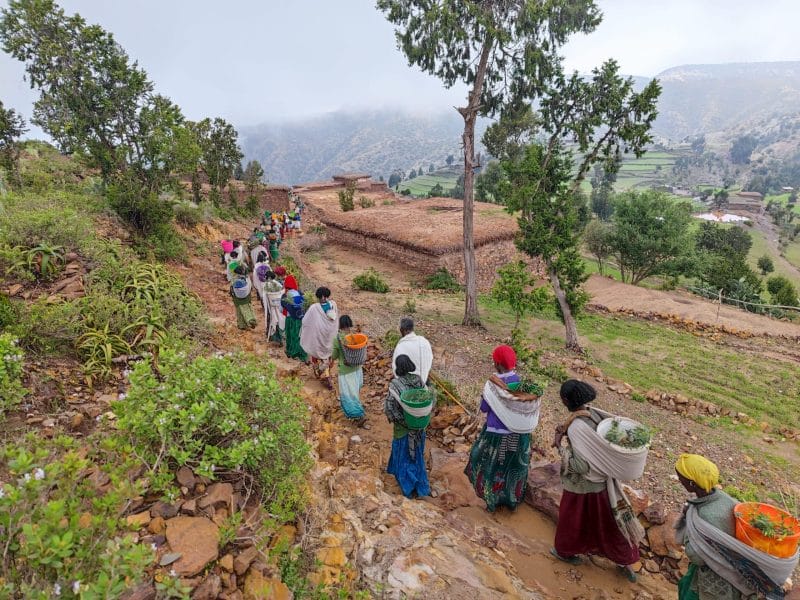
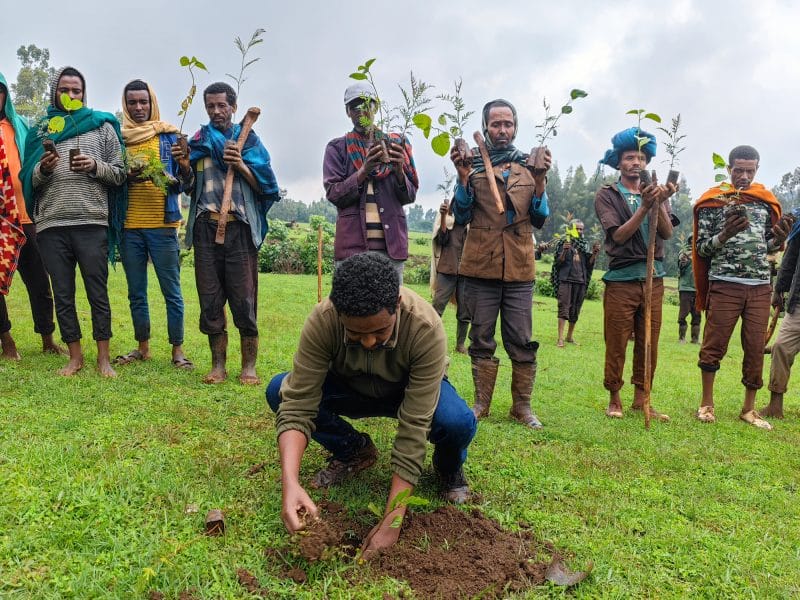
In Machakel in Ethiopia’s Amhara region, the local community is at the heart of the forest restoration project.
Indigenous trees are planted on community land, gullies and river banks, and fruit and timber trees are planted on farms.
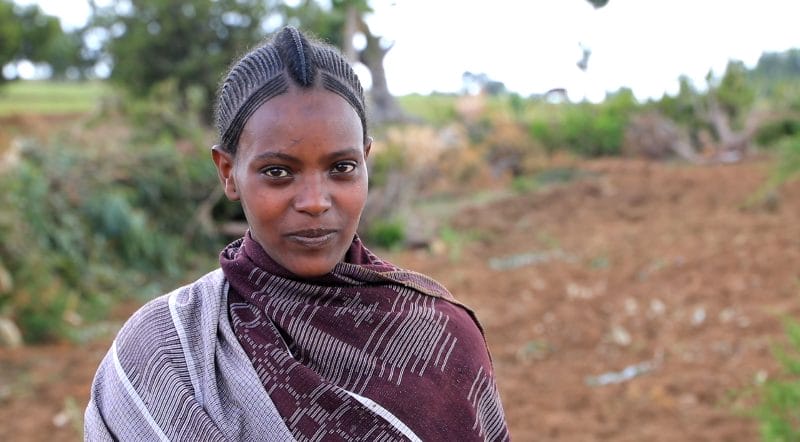
Villagers learn new skills and share these with other people in the surrounding villages. This enables the entire community to start protecting and restoring their own forests.
Include Faidherbia albida, Juniperus procera, Moringa stelapolata, Olea Europea, Pinus patula, Podocarpus spp
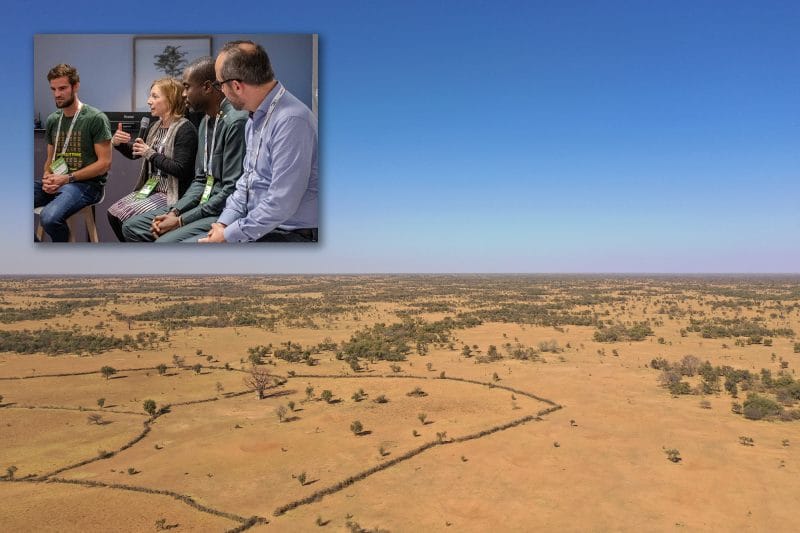
The immediate consequence of the desertification here is erosion of topsoil and the significant reduction of agricultural yields for smallholder farmers. Even more alarming is the possible long-term impact on local cloud formation and rainfall, causing more frequent droughts and food insecurity.
WeForest has been working since 2016 to directly restore and protect nearly 40 000 ha of the forest through Assisted Natural Regeneration (ANR) and Enrichment Planting.
We select species that serve multiple purposes in the forest and for the communities, generating a combination of social, economic and environmental benefits. Examples are olive (<i>Olea europaeat</i>), juniper (<i>Juniperus procerat</i>, pictured) and briar root (<i>Erica arboreat</i>), which are combined with different grass species for fodder and to reduce erosion. © WeForest
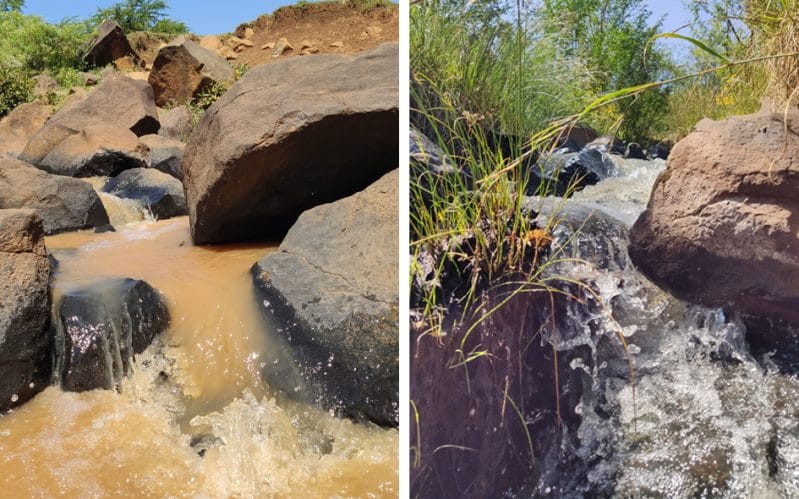
Soil and water conservation structures are built to reduce run-off and improve soil infiltration. © WeForest
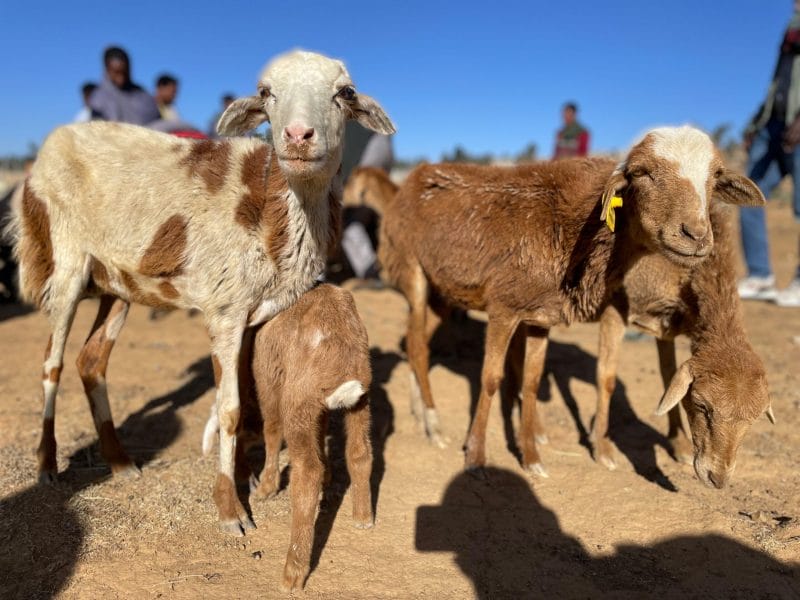
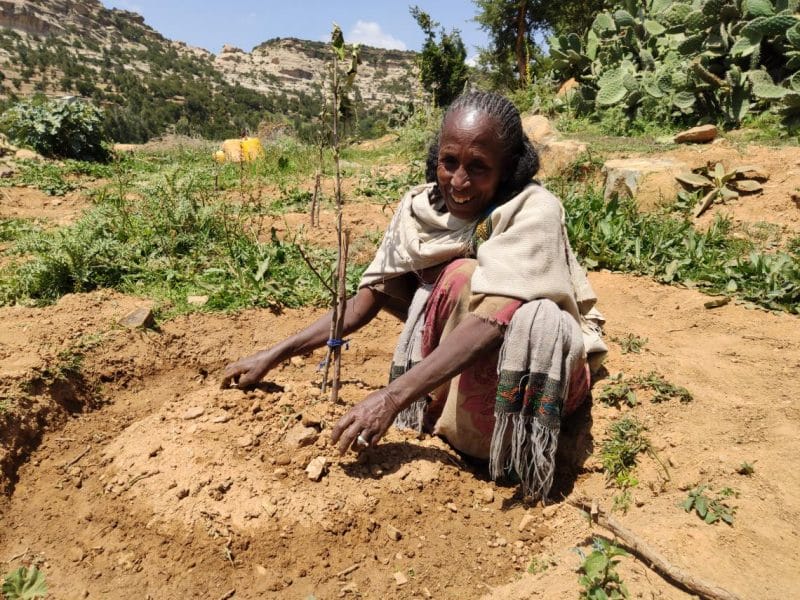
Examples of income-generating activities are beekeeping, poultry, sheep, high-value trees and vegetable seeds, efficient cookstoves, solar lights and the employment of forest guards. The project also establishes and strengthens rural schools’ environmental clubs. © WeForest
The Nubian dragon tree, Dracaena ombet, is categorized as Endangered on the IUCN Red List.





See which solution is right for you and get started today.
HQ (BE): WeForest asbl/vzw
Cantersteen 47, 1000 Brussels, Belgium
WeForest is a member of:





| Cookie | Duration | Description |
|---|---|---|
| __cf_bm | 1 hour | This cookie, set by Cloudflare, is used to support Cloudflare Bot Management. |
| _GRECAPTCHA | 6 months | Google Recaptcha service sets this cookie to identify bots to protect the website against malicious spam attacks. |
| cookielawinfo-checbox-analytics | 11 months | This cookie is set by GDPR Cookie Consent plugin. The cookie is used to store the user consent for the cookies in the category "Analytics". |
| cookielawinfo-checbox-functional | 11 months | The cookie is set by GDPR cookie consent to record the user consent for the cookies in the category "Functional". |
| cookielawinfo-checbox-others | 11 months | This cookie is set by GDPR Cookie Consent plugin. The cookie is used to store the user consent for the cookies in the category "Other. |
| cookielawinfo-checkbox-advertisement | 1 year | Set by the GDPR Cookie Consent plugin, this cookie records the user consent for the cookies in the "Advertisement" category. |
| cookielawinfo-checkbox-necessary | 11 months | This cookie is set by GDPR Cookie Consent plugin. The cookies is used to store the user consent for the cookies in the category "Necessary". |
| cookielawinfo-checkbox-performance | 11 months | This cookie is set by GDPR Cookie Consent plugin. The cookie is used to store the user consent for the cookies in the category "Performance". |
| CookieLawInfoConsent | 1 year | CookieYes sets this cookie to record the default button state of the corresponding category and the status of CCPA. It works only in coordination with the primary cookie. |
| elementor | never | The website's WordPress theme uses this cookie. It allows the website owner to implement or change the website's content in real-time. |
| JSESSIONID | session | New Relic uses this cookie to store a session identifier so that New Relic can monitor session counts for an application. |
| Path | session | Description is currently not available. |
| viewed_cookie_policy | 11 months | The cookie is set by the GDPR Cookie Consent plugin and is used to store whether or not user has consented to the use of cookies. It does not store any personal data. |
| Cookie | Duration | Description |
|---|---|---|
| _hjAbsoluteSessionInProgress | 1 hour | Hotjar sets this cookie to detect a user's first pageview session, which is a True/False flag set by the cookie. |
| _hjIncludedInSessionSample_2773626 | 1 hour | Description is currently not available. |
| aka_debug | session | Vimeo sets this cookie which is essential for the website to play video functionality. |
| authstrategy | session | Description is currently not available. |
| li_gc | 6 months | Linkedin set this cookie for storing visitor's consent regarding using cookies for non-essential purposes. |
| lidc | 1 day | LinkedIn sets the lidc cookie to facilitate data center selection. |
| pll_language | 1 year | Polylang sets this cookie to remember the language the user selects when returning to the website and get the language information when unavailable in another way. |
| UserMatchHistory | 1 month | LinkedIn sets this cookie for LinkedIn Ads ID syncing. |
| Cookie | Duration | Description |
|---|---|---|
| SRM_B | 1 year 24 days | Used by Microsoft Advertising as a unique ID for visitors. |
| Cookie | Duration | Description |
|---|---|---|
| _ga | 1 year 1 month 4 days | Google Analytics sets this cookie to calculate visitor, session and campaign data and track site usage for the site's analytics report. The cookie stores information anonymously and assigns a randomly generated number to recognise unique visitors. |
| _ga_* | 1 year 1 month 4 days | Google Analytics sets this cookie to store and count page views. |
| _gcl_au | 3 months | Google Tag Manager sets the cookie to experiment advertisement efficiency of websites using their services. |
| _hjFirstSeen | 1 hour | Hotjar sets this cookie to identify a new user’s first session. It stores the true/false value, indicating whether it was the first time Hotjar saw this user. |
| _hjSession_* | 1 hour | Hotjar sets this cookie to ensure data from subsequent visits to the same site is attributed to the same user ID, which persists in the Hotjar User ID, which is unique to that site. |
| _hjSessionUser_* | 1 year | Hotjar sets this cookie to ensure data from subsequent visits to the same site is attributed to the same user ID, which persists in the Hotjar User ID, which is unique to that site. |
| ajs_anonymous_id | 1 year | This cookie is set by Segment to count the number of people who visit a certain site by tracking if they have visited before. |
| ajs_group_id | 1 year | This cookie is set by Segment to track visitor usage and events within the website. |
| ajs_user_id | 1 year | This cookie is set by Segment to help track visitor usage, events, target marketing, and also measure application performance and stability. |
| AnalyticsSyncHistory | 1 month | Linkedin set this cookie to store information about the time a sync took place with the lms_analytics cookie. |
| CLID | 1 year | Microsoft Clarity set this cookie to store information about how visitors interact with the website. The cookie helps to provide an analysis report. The data collection includes the number of visitors, where they visit the website, and the pages visited. |
| CONSENT | 2 years | YouTube sets this cookie via embedded YouTube videos and registers anonymous statistical data. |
| MR | 7 days | This cookie, set by Bing, is used to collect user information for analytics purposes. |
| s_vi | 2 years | An Adobe Analytics cookie that uses a unique visitor ID time/date stamp to identify a unique vistor to the website. |
| SM | session | Microsoft Clarity cookie set this cookie for synchronizing the MUID across Microsoft domains. |
| VISITOR_PRIVACY_METADATA | 6 months | Description is currently not available. |
| vuid | 1 year 1 month 4 days | Vimeo installs this cookie to collect tracking information by setting a unique ID to embed videos on the website. |
| Cookie | Duration | Description |
|---|---|---|
| ANONCHK | 10 minutes | The ANONCHK cookie, set by Bing, is used to store a user's session ID and verify ads' clicks on the Bing search engine. The cookie helps in reporting and personalization as well. |
| bcookie | 1 year | LinkedIn sets this cookie from LinkedIn share buttons and ad tags to recognize browser IDs. |
| bscookie | 1 year | LinkedIn sets this cookie to store performed actions on the website. |
| IDE | 1 year 24 days 1 minute | Google DoubleClick IDE cookies store information about how the user uses the website to present them with relevant ads according to the user profile. |
| li_sugr | 3 months | LinkedIn sets this cookie to collect user behaviour data to optimise the website and make advertisements on the website more relevant. |
| muc_ads | 1 year 1 month 4 days | Twitter sets this cookie to collect user behaviour and interaction data to optimize the website. |
| MUID | 1 year 24 days | Bing sets this cookie to recognise unique web browsers visiting Microsoft sites. This cookie is used for advertising, site analytics, and other operations. |
| personalization_id | 1 year 1 month 4 days | Twitter sets this cookie to integrate and share features for social media and also store information about how the user uses the website, for tracking and targeting. |
| test_cookie | 15 minutes | doubleclick.net sets this cookie to determine if the user's browser supports cookies. |
| VISITOR_INFO1_LIVE | 6 months | YouTube sets this cookie to measure bandwidth, determining whether the user gets the new or old player interface. |
| YSC | session | Youtube sets this cookie to track the views of embedded videos on Youtube pages. |
| yt-remote-connected-devices | never | YouTube sets this cookie to store the user's video preferences using embedded YouTube videos. |
| yt-remote-device-id | never | YouTube sets this cookie to store the user's video preferences using embedded YouTube videos. |
| yt.innertube::nextId | never | YouTube sets this cookie to register a unique ID to store data on what videos from YouTube the user has seen. |
| yt.innertube::requests | never | YouTube sets this cookie to register a unique ID to store data on what videos from YouTube the user has seen. |
| Cookie | Duration | Description |
|---|---|---|
| __tld__ | session | Description is currently not available. |
| ajscookies | 1 year | No description available. |
| ajstest | 1 year | No description available. |
| debug | never | No description available. |

Click here to read our 2024 Annual Report